| ||
| ||
| ||
| | ||
|
2/08/2011
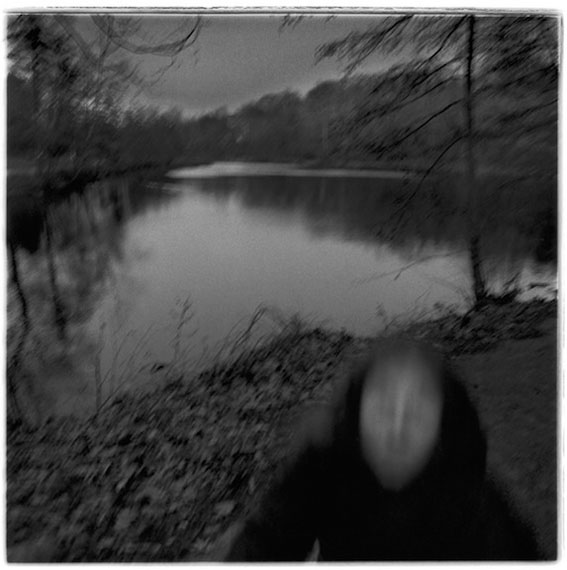
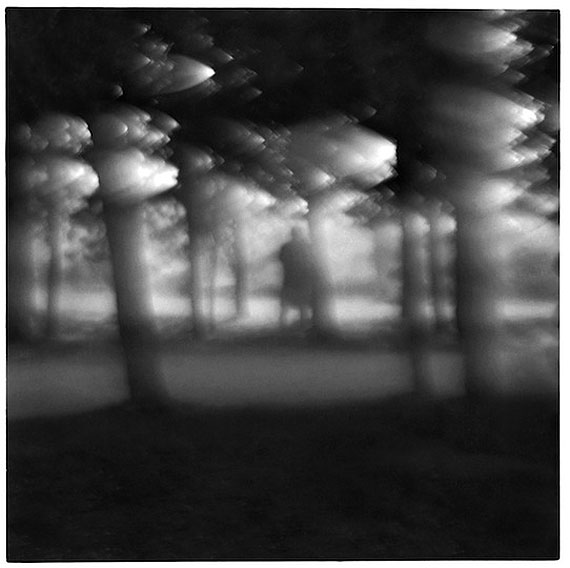
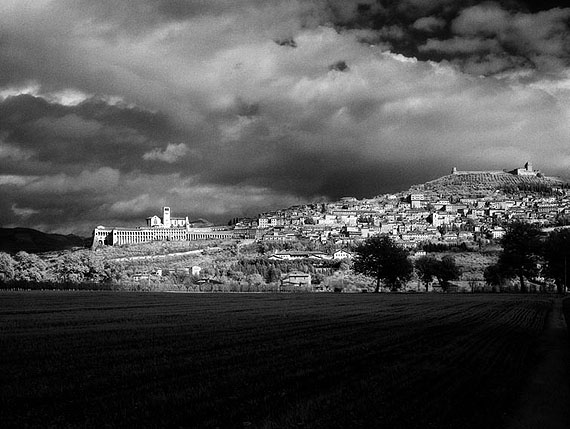
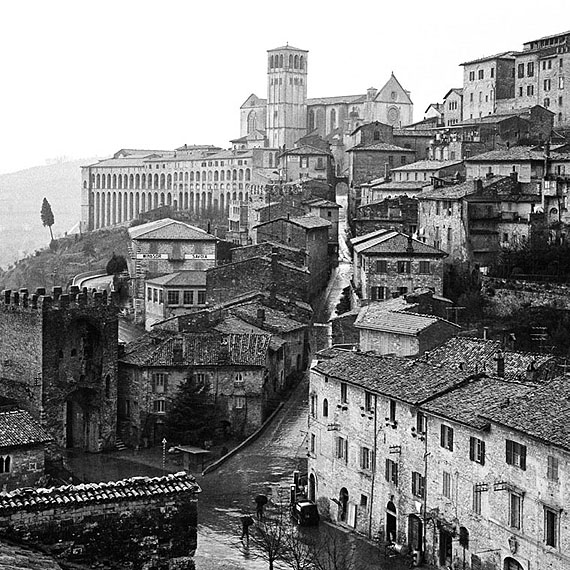
Density of Silence | Frank Dituri, Elio Ciol




2/02/2011
Foam_3h presents work by Joris Jansen, winner of the 2009 Steenbergen Stipendium

nebula micae, 2010 © Joris Jansen
until 23 March 2011
Foam_3h presents work by Joris Jansen, winner of the 2009 Steenbergen Stipendium
Kosmos is an ode to analogue photography.
The exhibition revolves around a single old analogue photo. This picture does not actually appear in the presentation, rather Jansen uses word and image to analyse all the information conveyed by the photo. The result is on the one hand a kind of encyclopaedia of everything relating to the photo. On the other, the material of the photo itself is examined. Using microscopic images in which the chemistry and grain are magnified hundreds of times, Jansen presents an abstract world in which the structure and texture acquire an extraordinary appearance.

40 x III, 2010 c Joris Jansen
Foam_Fotografiemuseum Amsterdam
Keizersgracht 609, 1017 DS Amsterdam
The Netherlands
+31 (0)20 5516500
info@foam.nl
www.foam.nl
In Kosmos, Jansen approaches an analogue photo from an encyclopaedic perspective. The result is a site-specific work for the Foam library on the third floor, which doubles as an exhibition gallery. Jansen describes and photographs the picture in microscopic detail: from the literal image in the photo, to the physical elements with which it is made.
The exhibition revolves around a single old analogue photo. This picture does not actually appear in the presentation, rather Jansen uses word and image to analyze all the information conveyed by the photo. The result is on the one hand a kind of encyclopaedia of everything relating to the photo. On the other, the material of the photo itself is examined. Using microscopic images in which the chemistry and grain are magnified hundreds of times, Jansen presents an abstract world in which the structure and texture acquire an extraordinary appearance.

system8, 2010 (c) Joris Jansen
Systems and Orders
This examination of the boundaries of photography and the uses of the medium is a recurring theme in Jansen s work. In Flock, his final exam series, for example, he explored the photo s meaning and its material. Using clichι photographic images landscape, portrait and still life Jansen presented three massive photos. These were constructed from hundreds of individual photos on the same theme, all found and collected on Internet. It is the viewer s distance from the work that then determines how the picture is read. From close-by, the viewer reads only a combination of pixels, while the further back the viewer steps the clearer the picture becomes.
Another series, Pictures of Hue, comprises photos in which the pixels of the original photo are rearranged. Jansen made this new arrangement based on the place of the individual colours in the HSB colour chart. The resulting abstract forms produce entirely new images.
CV
Joris Jansen (b. 1980) graduated in 2009 at KABK in The Hague and won the Steenbergen Stipendium the same year. He has exhibited at Netherlands Photo Museum in 2009, CBK Rotterdam in 2009, CBK Den Bosch in 2010, Galerie van Kranendonk, The Hague in 2009, Ten Bosch Initiatief, Den Bosch in 2010, Ministry of Education, Culture and Science (OCW), The Hague, Kulter Amsterdam in 2009 and Pulchri The Hague in 2010.
Joris Jansen lives and works in Amsterdam.
Kosmos was made possible with support from Van Bijlevelt Stichting and &Samhoud.
Kosmos, by Joris Jansen can be seen from 15 January to 23 March 2011 at Foam.
Open daily 10 am - 6 pm, Thurs/Fri 10 am 9 pm. Tickets: 8,00


"A PAINTED PERSPECTIVE" - Liang Weizhou's New Pictorialism

LIANG WEIZHOU: “Kite“
(2004-2006) Archival pigment print on fine art paper
60cm x 60cm - Edition of 12; 100cm x 100cm - Edition of 10
Liang Weizhou | A PAINTED PERSPECTIVE
22 January 2011 - 6 March 2011
m97 Gallery
No. 97 Moganshan Road 2F
Shanghai, China 200060
Tel: (+8621) 6266.1597
info@m97gallery.com
www.m97gallery.com
Tues - Sat 11:00 am - 6:00 pm
Sun 12:00 - 6:00 pm

LIANG WEIZHOU: “Old Wall, Shanghai“
(2009) Archival pigment print on fine art paper
40cm x 40cm – Edition of 5; 60cm x 60cm - Edition of 5; 100cm x 100cm - Edition of 3
"A PAINTED PERSPECTIVE" - Liang Weizhou's New Pictorialism
m97 Gallery Shanghai is pleased to present LIANG WEIZHOU’s newest photographic works in this solo exhibition titled “A PAINTED PERSPECTIVE”. The Shanghainese painter, most well known over the past fifteen years for his expressionist paintings, has been gaining critical acclaim and exposure for his new body of photography-based works.
Furthering in a long tradition of pictorialist photographers and photo-realistic painters, Liang Weizhou’s photographic works illustrate new possibilities found between painting and photography. As evident in several of his surrealist and expressionist paintings from the early 1990’s, Liang Weizhou has regularly explored the visual and conceptual relationship between painting and photography in his personal life and artistic practice. Occasionally painting self-portraits featuring a camera and tripod in the background or even himself toting a camera, it is very clear that the medium of photography as a way of seeing and interacting with the world has always been present in Liang Weizhou's conceptualization and realization of his artwork.

LIANG WEIZHOU: “Still Life with Newspaper“
(2002-2006) Archival pigment print on fine art paper
60cm x 60cm - Edition of 8; 100cm x 100cm -Edition of 6
After continued exploration and experimentation of the photographic image and process, Liang Weizhou has now clearly discovered his own visual language of interweaving his painting aesthetics with the continuing theme and subject matter of the often isolated and existential ordinary and intimate still life interiors.
Liang Weizhou is a trained and accomplished expressionist painter and thus never considered or imagined himself to be a serious “photographer”. But Liang Weizhou and his relationship with photography have always been at odds: He is a photographer and he is not a photographer. His photographs are photographs and they are not just photographs at the same time. Over the course of three decades the artist has gradually drawn his impassioned photography practice closer and closer to his heart and mind as a painter. And in a way, it has been the perfect marriage: the painter’s eye and sensitivity to formal aspects of composition, shape, shadow, texture and light, all lend themselves perfectly to be captured and laid out by the photographer on monochrome black and white film (he almost never photographs in color). It then sets the challenge for the painter to introduce the more abstract nuances of painted color, texture, emotion, mood and memory, which results in painting technique augmenting and transforming the photographs.
Liang Weizhou, born in Shanghai, China, lives and works in the city. His painting and photography works in addition to being widely exhibited in China have also been shown in galleries and museums across Europe, Japan, Hong Kong, Russia, Singapore, and the United States. His photography works are also in the permanent collection of the Shanghai Art Museum where they were exhibited in a solo exhibition in 2007.
A full-color catalogue accompanies the exhibition and is available for purchase in the gallery.

New Publication
LIANG WEIZHOU:
"Scenery and Still Life: A Painted Perspective"
Product Details:
Softcover: 60 pages, 45 color and black & white photographs
Dimensions: 22.50cm x 19cm Language: English, Chinese
Publisher: m97 Gallery Print Date: January 2011
To order please contact m97 Gallery at info@m97gallery.com
Exhibition URL: www.m97gallery.com/exhibitions/

LIANG WEIZHOU: “Fishing Boat on Dianshan Lake“
(2004 – 2010) Archival pigment print on fine art paper
40cm x 40cm - Edition of 5; 60cm x 60cm - Edition of 5; 100cm x 100cm -Edition of 3

LIANG WEIZHOU: “Lugu Lake Memory“
(1989 – 2006) Archival pigment print on fine art paper
40cm x 40cm – Edition of 5; 60cm x 60cm - Edition of 5; 100cm x 100cm - Edition of 3

LIANG WEIZHOU: “Jacket“
(2006) Archival pigment print on fine art paper
60cm x 60cm - Edition of 8; 100cm x 100cm - Edition of 6
photography-now.com
Torstr. 218 | 10115 Berlin | Editor: Claudia Stein
contact@photography-now.com | T +49.30.24 34 27 80
Existential Emptiness/CUI Xiuwen

Existential Emptiness No. 16 (detail), 2009, C print, 78 x 200 cm, Edition of 6
CUI Xiuwen | Existential Emptiness
29 January – 5 March 2011
at Blindspot Gallery, Hong Kong
Opening Reception: Friday, 28 Jan 2011, 6:30-8:30pm Artist will be present.
Blindspot Gallery
24-26A, Aberdeen Street, Central, Hong Kong Opening hours: Tue - Sat, 11am - 7pm
Tel.: +852 2517 6238
info@blindspotgallery.com
www.blindspotgallery.com
“Existential Emptiness” is Cui Xiuwen’s first solo exhibition in Hong Kong featuring Existential Emptiness, her latest series since she released Angel, in 2006.

Existential Emptiness No. 5, 2009, C print, 57 x 130 cm, Edition of 6
Existential Emptiness continues in a similar vein of digitally manipulated photography as her previous works, Sanjie (2003), One Day in 2004 (2004) and Angel (2006), where brilliant light and colorful palettes shine on the contradictions in cultural traditions and violence enacted against women in China. Existential Emptiness is a continuation of Cui's self-exploration and artistic expression of the female experience in today’s China. In contrast to the vibrant colours in her previous works, Existential Emptiness is a set of manipulation of digital photographic images of monochromic snow scene where the artist captured in Northern China, the images are reminiscent of traditional Chinese ink painting.

Existential Emptiness No. 7, 2009, C print, 102 x 82 cm, Edition of 6
Cui’s “girl” protagonist has always been considered as the artist’s alter ego in her works through which Cui addresses the violation of innocence under social and cultural pressure. The use of this alter ego has been extended to her new series.
In this series, Cui’s alter ego, the girl is slightly older yet still in school uniform and is accompanied by a life-size doll that looks alike her. The re-appearance of the protagonist in this series suggests a development of the artist’s alter ego in probing the question rooted in the deeper layers of the artist’s mind. The doll implicates the duality of body and soul as a burden and a shield to the girl at the same time. The relations of the girl and the doll seem to suggest the artist’s confrontation with her female identity and present the pain borne by women in Today’s China.

Existential Emptiness No. 18, 2009, C print, 96 x 200 cm, Edition of 6
In the universe of Existential Emptiness one finds both oppression and refuge, as the void offers an opening into enlightened, interior landscape. The refuge is also a meditation on the wider human condition, as silence is often the only transgression one can rage against cultural and social constraints.
Blindspot Gallery is proud to present select images from Existential Emptiness alongside an iconic piece from Cui's previous series One Day in 2004, 'One day in 2004 No. 1’.

Cui Xiuwen, One day in 2004 No. 1, 2006, C print, 120 x 120 cm, Edition of 8
About Cui Xiuwen
One of the most renowned artists in contemporary art in China, Cui Xiuwen graduated from The Central Academy of Fine Arts in Beijing in 1996. Cui's artistic career began with painting and evolved to include video works in the early 2000's, and her works presented a pointed exploration of the new sexuality in China. Since 2004, Cui has turned to photographic assemblages in an intriguing mix of digital manipulation, traditional motifs in both Western and Chinese arts and her singular aesthetics.
The work of Cui Xiuwen has been exhibited in some of the world's most prestigious galleries and museums including Tate Modern, Victoria and Albert Museum, International Center of Photography and Pompidou Centre. She is also one of the first Chinese artists exhibited at Tate Modern.
About Blindspot Gallery
Blindspot Gallery is set up to bring contemporary photography, an art form that has entered the blind spot of the Hong Kong art market, to a higher degree of visibility. We feature both established and emerging photographers and artists, mainly from the region but not limited to.
photography-now.com
Torstr. 218 | 10115 Berlin | Editor: Claudia Stein
contact@photography-now.com | T +49.30.24 34 27 80
William Yang. Old New Borrowed Blue

Self Portrait #2, 2007
William Yang
Old New Borrowed Blue
Stills Gallery Sydney
2 - 26 February 2011
Artist reception:Wednesday 9 February 2011 6-8pm
Stills Gallery
36 Gosbell Street . Paddington
NSW 2021 Sydney - Australia
Phone: +61 2 . 93317775 Fax: +61 2 . 93311648
info@stillsgallery.com.au
www.stillsgallery.com.au
Opening hours: Tues-Sat 11am-6pm
WILLIAM YANG
Old New Borrowed Blue
William Yang is one of Australia’s greatest storytellers. The fact that his stories are image based makes them all the more powerful and unique. He is a fine and prolific photographer as well as a renowned theatre performer. His very personal stories describe the experience of being Chinese in an Australia that was not always hospitable to people of different appearances or of a different sexual persuasion. He says his mother wanted desperately to fit in, wanting her children to be more Australian than Australians. As a result Yang claimed his Chinese heritage and celebrated Sydney’s gay culture of which he was part.
This exhibition will present many of Yang’s rich and celebratory images of the gay community in Australia’s most international city from the seventies to the present. They reveal a world of personal and sexual expression. Many are black and white documentary images of cultural events such as Mardi Gras and the Sleaze Ball. Others are colour portraits of men Yang has photographed in a mutually enjoyed performance for his lens. “Photographing attractive men,” he says, “is one of the guilty pleasures of my old age, though they generally only like me for my camera.”

Alter Ego, Bondi, 2000
Yang is also a fine landscape photographer, something less known than his association with portraiture and documentation of people and their activities. Yang won second prize in the recent Plein Air Parliamentary Prize with an exquisite colour landscape of the burnt country in the Blue Mountains. He has always been interested in a sense of place and the beauty of the natural world.
A centrepiece to the exhibition will be a new series of self portraits covering the span of Yang’s life. Shown in a smaller selection at GOMA Brisbane as part of The China Project these delightful images tell us more than we already know about the nature of Yang’s bold journey embracing his identity as an Australian citizen and a contemplation of life’s milestones. All these works have a written commentary, which has become a hallmark of Yang’s later works. The tone is always gently wry with a delightful mix of humour and seriousness.
The title is taken from the saying “Something old, something new, something borrowed, something blue” which refers to the bride’s accoutrements. It refers to the custom of wearing a particular mix of things for good luck. When showing work, Yang tends to draw on his large collection of images, so that photos range over long periods of time to illustrate life’s themes.
Yang is a delicate and unexpected presenter, offering others a reminder that life is for living in whatever way you choose as long as you accept and honour yourself.
photography-now.com
Torstr. 218 | 10115 Berlin | Editor: Claudia Stein
contact@photography-now.com | T +49.30.24 34 27 80
1/03/2011
'Concrete Photo, Photogram Exhibition', Vasarely Museum Budapest

Thomas Freiler
Modern art where there was no longer a borderline between genres evolved in the 1920s with one of its prominent representatives being László Moholy-Nagy, perhaps the most well known Hungarian artist worldwide. Concrete Photo, Photogram will exhibit his works together with those by Lucien Hervé, Pierre Cordier, Thomas Freiler and Balázs Czeizel.

Jaroslav Rössler
CONCRETE PHOTO, PHOTOGRAM
In the first decade of the 20th century painters Wassily Kandinsky and Theo van Doesburg coined the term “concrete art” for a still vigorous abstractionist trend that proposes an autonomous inner organisation in painting and plastic art independent of the external visual reality. Concrete photography and the photogram appeared alongside concrete painting. International contemporary art exhibitions display photographs in which the light and shade of visual forms have an autonomous pictorial meaning, as well as photograms, which are photo-works, images and objects made without a camera.
The photogram is a broad term covering diverse image-production techniques ranging from traditional object-light imprints to chemograms, luminograms, thermograms and other new, explorative methods. The artist encounters light, light-sensitive materials, chemicals and their coefficient inner regularities using a minimum of artistic tools.

György Kepes

László Moholy-Nagy
In the 1920s the adherents of modern art, stepping across the borderlines between genres, turned their attention to the century-old technique of imprinting with light. Pioneering figures of the movement included László Moholy-Nagy, Christian Schad and Man Ray. The innovative fields of photo-, lumino-, and chemograms have captured the imagination of generations of artists, including many Hungarians, with renewing impetus since the very beginning. Some artists build their entire oeuvre on this art form, while others regard it as a means to link analog and digital visuality.
The exhibition can be viewed daily from 10 a.m. to 5.30 p.m. until 26 September, except Mondays. Address: Budapest, III. Szentlélek tér 6."
http://www.szepmuveszeti.hu/web/guest/articleview?mi_article_id=696
BÖLCSKEY Miklós, CSÁBI Ádám, CZEIZEL Balázs, Pierre CORDIER, Inge DICK, EPERJESI Ágnes, ERDÉLY Miklós, FELEDY Balázs, Winfred EVERS, Thomas FREILER, GYARMATHY Tihamér, Heinz HAJEK-HALKE, Heinrich HEIDELBERGER, Lucien HERVÉ, Karl Martin HOLZHÄUSER, HÜBNER Teodóra, Gottfried JÄGER, Herwig KEMPINGER, KEPES György, KEREKES Gábor, Miroslav KOVAL, LENGYEL Lajos, Franz LINSCHINGER, LŐRINCZY György, MAURER Dóra, MEGYIK János, Uwe MEISE, Antoni MIKOLAJCZYK, MOHOLY NAGY László, Sabine RICHTER, Józef ROBAKOWSKI, Jaroslav RÖSSLER, Jack SAL, SZELÉNYI Károly, TÜRK Péter, VESZPRÉMI László
http://www.osas.hu/konkretfoto_2010/konkretfoto_2010.htm
The term 'concrete art' was coined by painters Wassily Kandinsky and Theo van Doesburg in the first decades of the 20th century, referring to the still-ongoing endeavour of abstract art to create an autotelic inner order of pictures and sculptures, independent of the seen world. Concrete photography and photogram represent a phenomenon parallel to concrete painting.
Concrete Photo, Photogram features works by contemporary international artists; partly photographs in which the light-and-shade relations of forms are endowed with autonomous pictorial meanings, and partly photographic artworks – pictures or objects – made without a camera, that are termed photo-grams. Photogram is an umbrella term embracing various imaging methods from traditional imprints of light and objects, through chemogram and luminogram, to thermogram and further, still-unknown, new possibilities. It is without almost any tool or apparatus that the artist handles light, photosensitive materials, and chemicals, or rather, their interactions following from internal laws.12/25/2010
Project art theory: Concrete Photography
Project art theory: Concrete Photography
Concrete Photography can be regarded as a new genre within Concrete Art. As such it appears alongside other related modes of artistic expression like Concrete Painting, Concrete Music or Concrete Poetry. At the same time, it is a branch of photography.
Overall, we are dealing with a phenomenon for which there is still no conclusive theory or comprehensive description, even though as a discipline in its own right it has produced its own specific kind of picture since the beginning of the twentieth century and, indeed, continues to exert influence. This publication is the first as such to present the history, aesthetics and technique of Concrete Photography, incorporating approx. 150 works by 80 international artists.
Authors:
Gottfried Jäger
Photographer and former Professor for Photography at the University of Applied Sciences, Bielefeld; in the mid-1960s, he developed the theory and practice of Generative Photography as a contribution of Concrete Photography with a systematic constructive approach.
Rolf H. Krauss
Art and Media Scientist; in the 1970s, he built up both his own collection of Art With Photography, focusing in particular on Concept Art and Action Art, and his extensive photographic library - today part of the Graphic Collection of The State Gallery Stuttgart.
Beate Reese
Art Historian; she is the curator of the Peter C. Ruppert Collection - Concrete Art in Europe after 1945 in the Museum im Kulturspeicher Würzburg (Storehouse of Culture Museum, Wurzburg) with its department of Concrete Photography.
New Publicatio
 n
nConcrete Photography / Konkrete Fotografie Gottfried Jäger, Rolf H. Krauss, Beate Reese
Concrete Photography
Konkrete Fotografie
English/German Format 17 x 24 cm 256 pages, ca. 160 Color and Duplex-illustrations. Hardcover
Kerber Verlag Bielefeld März 2005 ISBN 3-936646-74-0
34 Euro / SFR 56.50
The prominent characteristic of photography in general is to generate images of recognisable similarity with their original counterparts. In contrast, concrete photographs do not replicate anything of similarity. They rather concretise that which is photography, thereby making the latter lose its status as a medium, but gain status as an object. Concrete photographs are aesthetic objects of themselves.
Although certain works from the early twentieth century onwards could claim this status, the term ’concrete’ was only later used in the context of aesthetic discourse, namely in the early 1930s. Theo van Doesburg called art ’concrete’ when it depicted nothing but ’itself’. He only considered the self-referential pictorial context to be of significance. Every reference to external reality was to be ignored. Mimesis and symbolism, intrinsic features of image-making as a whole, were to be abolished at the expense of a pure, elementary figurativeness. Only the means inherent to the medium used were to be applied for the construction of images.
With reference to photography this means that autonomous images are produced. Concrete photographs neither replicate nor represent anything. They are what they are: the reality of photography. Free photographic experimentation and conscious creative use of the most innate means and techniques of photography have conjured up, and still do, a self-referential world of images, highly abstract, non-figurative, and of a form never hitherto seen: concrete photography.
March 2005
from http://www.gottfried-jaeger.de/index-en.html
12/24/2010
Fotocreative di Concrete photography.Manolis Kassimatis
- a part of my photocreation of Concrete photography. manolis kasimatis
da sito: http://www.manolokasimatis.gr/
xromocircleshapes 1

fotocreative:
manolis kasimatis

fotocreative:
manolis kasimatis

fotocreative:
manolis kasimatis
The negatives have creative ad 1993-1994. The digital negatives have creative ad 2006 and theirs digital elaboration ad 2009-10.
xromocircleshapes 2

fotocreative:
manolis kasimatis

fotocreative:
manolis kasimatis

fotocreative:
manolis kasimatis
The negatives have creative ad 1993-1994. The digital negatives have creative ad 2009 and theirs digital elaboration ad 2010
xromoshapes II

fotocreative:
manolis kasimatis

fotocreative:
manolis kasimatis

fotocreative:
manolis kasimatis
The negatives have creative ad 1992. The digital negatives have creative ad 2006 and theirs digital elaboration ad 2008.
xromokivism 1

fotocreative:
manolis kasimatis

fotocreative:
manolis kasimatis
The negatives have creative ad 1993. The digital negatives have creative ad 2007 and theirs digital elaboration ad 2009-10.
xromodropshapes II (surrealistic)

fotocreative:
manolis kasimatis

fotocreative:
manolis kasimatis
The negatives have creative ad 1989-1991. The digital negatives have creative ad 2006-7 and theirs digital elaboration ad 2009-10.
altre foto http://www.manolokasimatis.gr/
11/26/2010
‹abstract› Antonio Azuaga | Richard Caldicott | John Goto | Edward Mapplethorpe | Silvio Wolf

Richard Caldicott, Chance / Fall #1, 2010
‹abstract›
Antonio Azuaga | Richard Caldicott | John Goto |
Edward Mapplethorpe | Silvio Wolf
Opening, Thursday 25th November 6:30 – 9 pm
Exhibition: 26th November 2010 - 29th January 2011
Galerie f5,6
Nicole Lenz & Florence Baur
Ludwigstr. 7 (Odeonsplatz), 80539 München
Tel: +49 (0)89 28 67 51 67 Fax: +49 (0)89 28 67 52 83
info@f56.net www.f56.net
Tues-Fri 12- 6pm, Sat 11am- 3pm
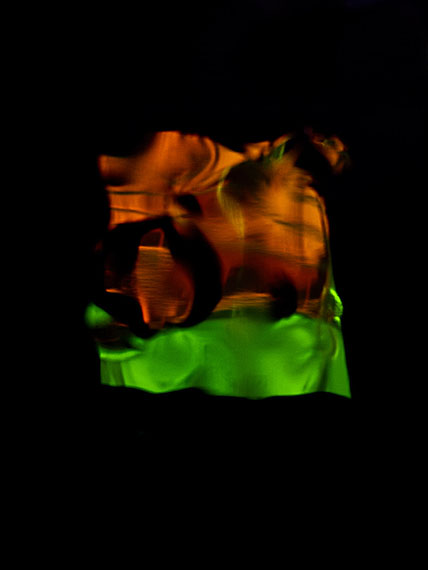
Antonio Azuaga, Untitled #07, 2010
‹abstract› Antonio Azuaga / Richard Caldicott / John Goto / Edward Mapplethorpe / Silvio Wolf
The exhibition ‹abstract› as the definition most simply states is quite simply an „abstract“ and concurrently a small exploration into the possibilites of abstract photography now.
Since 2003 abstract photography has been a central and recurring theme of the gallery programme. Next to three artists the gallery has worked with since 2003 - Antonio Azuaga (Spain), Richard Caldicott (Great Britain) and John Goto (Great Britain), we have invited Edward Mapplethorpe (USA) and Silvio Wolf (Italy) to show their latest work. From the beginning of photography in the late 19th Century, the medium has often defined itself through the often dramatic rivalry of painting versus photography.
But abstract photography has been a small but fascinating strand, ever since the beginnings, from Henry Fox Talbot’s experiments with photograms of metal gauze and lace to Moholy Nagy, Man Ray to contemporary artists like Adam Fuss, Wolfgang Tillmans or Richard Caldicott.
At first thought the idea of abstract photography seems very simple indeed. On closer inspection, however, it is a far more complex field. In Lambert Wiesing’s essay on abstraction (2000) he distinguishes various forms of abstraction in photography: abstraction in the photographic production process, in the photograph itself, in the view point, to make something specific visible and to create form or art in its own purpose. What brings all these together though is surely the intention of reduction to its most essential, inner form.
Antonio Azuaga (* 1974, lives and works in Barcelona, Spain)
In Antonio Azuaga’s work, light, colour, reflection, and time become one. Large format, almost bizarre colour fields melting into each other, are created. Azuaga’s work continues a dialogue of painting and photography, calling into mind 60’s American Abstraction of Morris Louis or Helen Frankenthaler. The viewer leaves the immediate pictorial plane, diving into a world of focused and unfocused details, which seem to be in constant movement, leaving the viewer to decide what he/she wants to see. General ideas on photography such as time, documentation of reality are approached very differently in Azuaga’s work.
Richard Caldicott (*1962, lives and works in London)
The creation process and and its critical examination is a central theme of Caldicott’s work. Caldicott has been working with abstract photography since the early 1990’s. Art historically speaking, Caldicott’s work is in dialogue with what Donald Judd called the „specific object“- an art object wich is neither painting nor sculpture, evading all forms of categorisation. His latest work Chance/Fall results out of an ongoing interest of the formal mechanical qualities of photography without the hand of the artist, where coicidence becomes precedent. Richard Caldicott studied at the Royal College of Art in London. He has had many solo and group exhibitions in Europe and the US and is represented in the following collections: Art Lab, Tokyo, Collection Ann & Jürgen Wilde, Kunstmuseum Bonn, Merril Lynch, Sir Elton John Collection, BP Amoco.
John Goto (*1949, lives and works in Oxford, UK)
Prompted by the invasion of the Gaza Strip by the IDF (27 December 2008 – 21 January 2009), John Goto made “Mosaic”, a series of apparently abstract images. Access to the conflict was denied to the international press. One common means of censoring digital images is the application of a standard graphics filter called Mosaic. Having mapped a grid across the image, the filter averages the tones and colours within each rectangle. To resolve the problem of relating a visible to an invisible image, Goto created a double-sided print onto a single sheet of paper. The censored image is visible within the frame, but by removing the picture from the wall, the uncensored verso is revealed. The series continues Goto’s investigation into the relationship between modernist abstraction and politics began in his ‘Terezin’ series (1987). The title Mosaic also refers to Moses the Lawgiver. John Goto’s works are in collections such as the Victoria and Albert Museum, London, the National Portrait Gallery, London or the Deutsche Bank Sammlung, London.

John Goto, Mosaic #01, 2008/09
Edward Mapplethorpe (* 1960, lives and works in New York, USA)
Edward Mapplethorpe is interested in the photographic production process in itself and thereby its abstraction possibilities. His works are created without a camera in the dark room in the tradition of the photogramme. Edward Mapplethorpe draws geometrical compositions with the use of light the result being between painting and a drawing in all possible grey tonalities. In 2004 Mapplethorpe received an award of the renowned Henry Buhl Foundation in New York.

Edward Mapplethorpe, Untitled No. 8972, 2006
Silvio Wolf (* 1952, lives and works in Milano, Italy)
Silvio Wolf does not influence the creation process of his work any longer, as his work is the image before the image is created in the camera. The series on show are essentially images created by the automatic exposure to light when film is inserted into the camera. „Each Horizon reveals a threshold, the clear limit between light and darkness, between matter and language. Through this series I develop the concept of photography before the picture. The Horizons are visible forms of light echoes.“ (Silvio Wolf)

Silvio Wolf, Horizon 16 - Chance 03, 2002
photography-now.com
Torstr. 218 | 10115 Berlin | Editor: Claudia Stein
contact@photography-now.com | T +49.30.24 34 27 80
11/25/2010
Ugo Mulas. Un libro di Elio Grazioli
Ugo Mulas. Un libro di Elio Grazioli di Alessandra Ronetti © CultFrame 12/2010
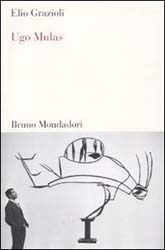
Considerato uno dei fotografi italiani più significativi del secondo dopoguerra, Ugo Mulas (Pozzolengo 1928- Milano 1973) è indubbiamente un autore dalla personalità sfaccettata. La monografia di Elio Grazioli, studioso di arte contemporanea e fotografia, ci fornisce una ricostruzione completa del percorso compiuto dal fotografo, illustrandone con chiarezza e semplicità quasi manualistica i vari passaggi. Grazioli propone di interpretare l’intera vicenda artistica di Mulas (dagli inizi neorealisti nel contesto milanese sino agli esiti concettuali delle Verifiche) come un percorso da leggere in senso unitario attraverso la capacità di Mulas di aggiornare costantemente la propria ricerca, nonché la necessità morale di indagare la verità mediante un confronto con la realtà. A Milano, nel 1951, Mulas decide di abbandonare gli studi di Giurisprudenza e comincia a frequentare il corso serale di nudo all’Accademia di Brera, incontrando quel gruppo di artisti e intellettuali che si radunavano al bar Jamaica. Questi anni giovanili sono segnati per il Mulas fotografo autodidatta dall’attenzione al fotogiornalismo e dal rapporto con il cinema neorealista. Il tema della visione – come nota Grazioli – è per Mulas vissuto sin da subito in chiave esistenziale “nel senso di una scelta che vuole intrecciare la vita, l’etica e l’estetica, dunque la verità e il comportamento fin dentro la peculiarità del mezzo e del linguaggio che il fotografo usa […]”. Il primo lavoro in cui Mulas si cimenta è un reportage della Biennale di Venezia del 1954, nel quale cattura locali, ristoranti, caffè, dimostrando una certa attrazione verso il rito collettivo della festa. Con questo primo reportage diventa già evidente come Mulas prediliga, più della ricerca autobiografica, l’osservazione degli artisti e come lo sviluppo della sua creatività avvenga attraverso un rapporto con la creatività altrui. Mulas sarà anche un grande fotografo di moda, gioielli, teatro e architettura. La collaborazione con il mondo della moda gli offrirà un altro mezzo di sperimentazione, infatti lungi dal cedere all’idea diffusa di una fotografia di moda atta a costruire un immaginario di sogno, accorderà le foto di moda alle proprie istanze di ricerca artistica, contestualizzando gli abiti in scenari reali. Negli anni sessanta, in un clima diverso, sceglierà ambientazioni metafisiche piuttosto che neorealiste per gli abiti, degni per Mulas di essere fotografati in quanto simboli del lavoro intellettivo dello stilista-artista. In tal senso, nel 1969, Mulas realizza gli scatti che ritraggono i gioielli di Arnaldo Pomodoro e, nel 1970, instaura un sodalizio creativo con la stilista Mila Schön. Il lavoro per il teatro comincia invece nel 1960, quando Mulas realizza un servizio in Russia, in seguito alla collaborazione con il Piccolo Teatro di Milano. ......
continua a sitohttp://www.cultframe.com/2010/12/ugo-mulas-libro-elio-grazioli/
CREDITI Titolo: Ugo Mulas / Autore: Elio Grazioli/Editore: Bruno Mondadori, 2010 / Collana: Testi e pretesti / 215 pagine / Prezzo: 19.00 euro / ISBN: 978-88-6159-473-9.
LINK
http://www.ugomulas.org
CULTFRAME. Ugo Mulas – Maestri della fotografia
CULTFRAME. United artists of Italy. Artisti nell’obiettivo dei grandi fotografi
Bruno Mondadori
11/23/2010
Cedric Delsaux: The Dark Lens
Cedric Delsaux: The Dark Lens

15 November 2010 - 2 January 2011
Galerie ACTE 2 41 rue d'Artois, 75008 Paris
+33(0)1 42 895 005 acte2galerie@orange.fr
www.acte2photo.com
Opening hours: Mon-Fri 10am-7pm . Sat 12-6pm

Cedric Delsaux: The Dark Lens

Cedric Delsaux: The Dark Lens
The recent photo works of Cedric Delsaux, the final installment of his Dark Lens trilogy dealing with the fact and fiction of modern urban space, can be viewed as an attempt to approach this enigmatic, emblematic city, using cinematic futurism as a tool to get a grasp on the present. Cedric describes the feeling he had as if walking around in a gigantic set for a science fiction film: "I instantly knew that all the characters from the Star Wars galaxies would be at home here." Seen through his Dark Lens, Dubai appears to be finally welcoming the guests it has been built for from the beginning.
Delsaux collapses the realm of fiction and the realm of the real onto a single image plane: film characters are inserted into photographs of existing locations that often appear less real than the iconic crew and vehicles of the Star Wars films, whose adventures we have witnessed with our own eyes on screens around the globe. What the artist aims for is not a photographic rendering of the raw reality of Paris, Lille, and now Dubai, but an exploration of the dream potential these cities hold within. He feels we are unable to truly see the world that surrounds us; we can only ever have a perception of it, filtered through the prism of our own culture, history, our sensitivity. Cedric explains: "Since I cannot convey reality, I'll show the perception, the fiction, I have of it." Simultaneously facetious game, dark joke and mise en abyme, Cedric Delsaux has developed what he calls "an aesthetic of the in-between", inextricably interweaving fantasy with real objects. This new world, accurate, swarming with objective details, is absolutely false, yet totally truthful in so far as it reveals the essentially retro-futuristic characteristic of modern urban spaces, which are simultaneously too early and far too late.
However tempting, the work of Delsaux ought not be reduced to a mere game of digital manipulations that tap into the visual language of commercial advertising and myth-making film history. Despite moving in the territory shared by both film and advertising, Cedric Delsaux's work remains firmly rooted in contemporary landscape photography. The starting point of his Star Wars trilogy was a project exploring the nature of urban architecture, called La Vitrine des Choses, set in the north of France. Cedric recounts: "I photographed ordinary places, warehouses, harbours and houses that I tried to render extraordinary by setting them in a particular frame and experimenting with lighting. I continued this project in the suburbs of Paris, but realized there was something missing, since the images no longer seemed that extraordinary. It was at this point that I decided to introduce sci-fi characters. Star Wars was a part of my childhood like many kids my age, but I wasn't a fan. It wasn't necessarily my chosen genre - nevertheless, the power of Star War films overtakes the sci-fi genre by a mile."
The insertion of sci-fi characters was to be the key to a hidden door of perception, transforming our quotidian surroundings into places where anything might happen. For instance, travelling around Dubai after seeing this exhibition will never be the same again. One day you may find yourself looking up at the sky, expecting to see speeder bikes chasing each other around the Burj Tower, only to realize you were fooled for a second by the sound of traffic around you. Rejoice and shiver, imagination has invaded everything.

Cedric Delsaux: The Dark Lens
photography-now.com
Torstr. 218 | 10115 Berlin | Editor: Claudia Stein
contact@photography-now.com | T +49.30.24 34 27 80